Annex 1, PE 010, and a Question Behind Automated Compounding
Over the last few posts I've been working through a question that keeps coming up with customers: does a CSTD actually solve the risk it's supposed to solve, once the transfer is automated and not manual?
That question led somewhere I didn't expect. Sterility, it turns out, isn't something you add to a machine by installing one closed connector. It's a property of the whole process. And once you accept that, a bigger question opens up: what does "pharma-grade" actually mean, for a machine that prepares drugs?
Sterility is an architecture, not a component
The short version, for anyone who hasn't read the earlier posts on Linkedin: a review of studies comparing vials punctured with CSTDs against vials punctured conventionally found no significant difference in contamination rates, once you look only at the studies that actually ran a comparison. Closed doesn't automatically mean sterile. It means closed.
Sterility depends on the vial surface, the disinfection step, the environment, the sequence of actions, how many times something is punctured, how the whole thing is validated. The connector is one variable among many. Not the guarantee.
That's the point where Annex 1 becomes genuinely useful, not as a legal requirement for hospital compounding, but as a model of how serious contamination control actually gets engineered.
What Annex 1 actually says about human presence
The 2022 revision of EU GMP Annex 1 is built around one idea: the human operator is the primary source of contamination in an aseptic process. Not one risk factor among several. The primary one.
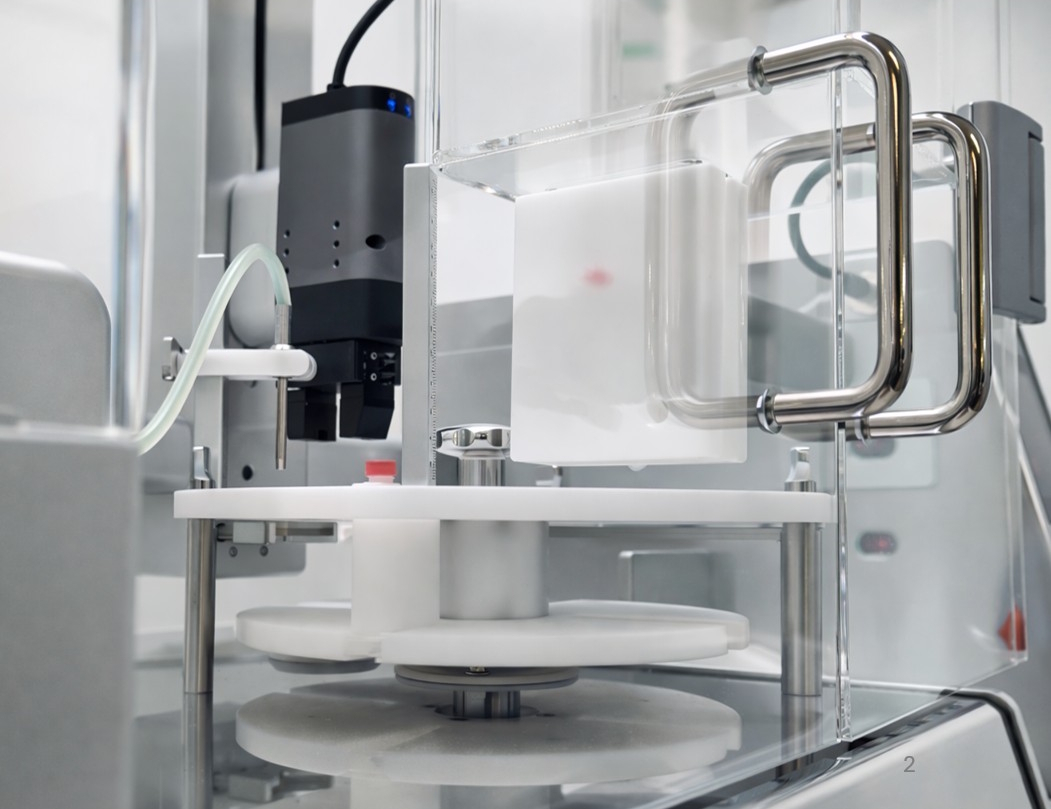
Everything else follows from that. Annex 1 requires a documented Contamination Control Strategy that treats barrier technology, RABS or isolators, as the default approach for protecting the critical zone from direct human intervention. Alternative approaches have to be justified. That's a meaningful shift in how the requirement is framed: barrier technology isn't a recommendation anymore, it's the baseline, and you explain yourself if you don't use it.
The direction hasn't stopped there. Across the industry, isolator design is moving from glove-based manipulation toward gloveless, robotic isolators, specifically because even a gloved hand inside a barrier is still a source of variability: glove integrity, technique, fatigue. The logic driving Annex 1 isn't "protect the product from the room." It's "reduce the human hand's involvement wherever the process allows it."
Why Annex 1 doesn't apply to hospital pharmacies, and what does
Here's where it's worth being precise, because it's easy to get this wrong.
Annex 1 is legally binding for holders of a manufacturing authorisation, companies producing medicinal products for the market, under Article 47 of Directive 2001/83/EC. Hospital pharmacy compounding runs under a different legal logic. Article 3(1) of the same directive exempts the preparation of a medicine against a prescription, for a specific patient, from the marketing authorisation requirement, and the Court of Justice of the EU has ruled that this exemption applies narrowly. In the Abcur case, the Court set three conditions:
a) the product must be prepared against a prescription issued beforehand
b) the product must be prepared for an identified patient
c) the product must be dispensed directly by the pharmacy that prepared it.
a) the product must be prepared against a prescription issued beforehand
b) the product must be prepared for an identified patient
c) the product must be dispensed directly by the pharmacy that prepared it.
Hospital compounding, in other words, isn't a smaller version of industrial GMP manufacturing. It's a different regulatory category, on purpose.
The framework actually written for that category already exists. PIC/S publishes two parallel guides: PE 009, which covers industrial manufacture and includes Annex 1, and PE 010, the Guide to Good Practices for the Preparation of Medicinal Products in Healthcare Establishments, written specifically for pharmacies. The scope section of PE 010 says this outright: PE 009 applies to industrial manufacture, PE 010 applies to preparation performed by healthcare establishments for direct supply to patients. It's the same underlying logic as Annex 1, contamination control built into equipment, materials, environment, process and validation, adapted for a different scale and a different legal basis. The EDQM Resolution on good reconstitution practices in healthcare establishments is built on this same PE 010 framework.
So the correct reference for hospital compounding isn't Annex 1. It's PE 010. But the thinking behind both documents comes from the same place.
The real gap between industrial pharma and hospital compounding
This is where it gets interesting for machine design.
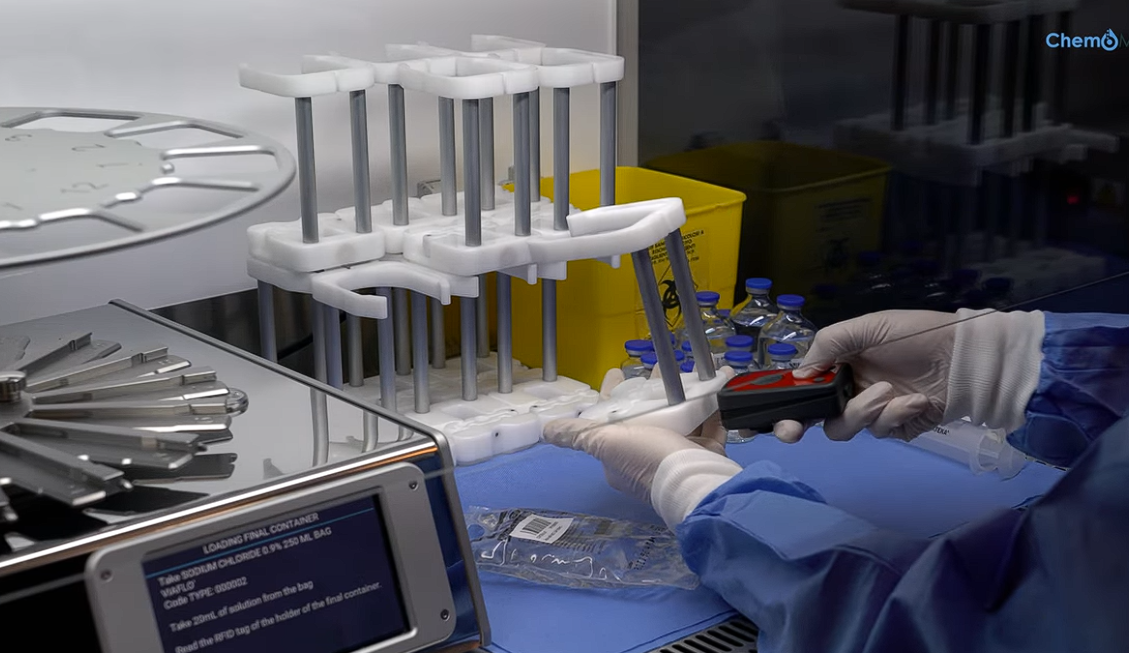
PE 010 requires physical containment for hazardous drugs: biological safety cabinets or isolators, room classification, pressure control. What it doesn't require is automation. The operator still works through the barrier, manually, with gloves. PE 010 solves "protect the operator from the drug." It doesn't solve "reduce the variability of the human hand," which is the problem Annex 1 has been pushing industrial manufacturing to solve for the last few years. This is at least what we understand from the different approaches of the guidelines.
That's not a criticism of PE 010. It's written for a different context, smaller batches, patient-specific preparations, a completely different economic and operational reality than an industrial fill line. But it does mean hospital compounding isn't currently required to reach the level of human-intervention reduction that industrial pharma already treats as the baseline.
Which leaves an open question, and I think it's the right one to ask: does automated hospital compounding wait for that requirement to arrive, or does it get there first, because the engineering logic behind it is already proven at industrial scale?
Facility cost vs. disposable cost
If you take that seriously, it changes how you think about where cost should live in the system.
A machine that pushes more of the contamination control into reusable, engineered hardware, containment, precision, validated cleaning, tends to cost more upfront and less per preparation. A machine that relies more on the disposable to do that work costs less to buy and more, continuously, to run, and usually produces more waste per preparation as a side effect.
For a hospital, the ongoing cost per preparation matters more over time than the purchase price of the machine. It's the number that decides whether a project survives past the first budget cycle.
Proprietary vs. interoperable disposables
The same logic applies to how the disposable itself is designed.
A single proprietary disposable is easier to validate, you're only qualifying one bill of materials, but it locks the customer into one supplier, with all the supply-risk and pricing exposure that comes with it. In European public procurement especially, that kind of lock-in is increasingly treated as a liability in the tender itself, not a convenience.
A machine designed around standard formats, standard vials, syringes, bags, already governed by their own ISO specifications, is harder to engineer, because you're managing tolerances across multiple suppliers instead of one. But it's a far more defensible position for a hospital's own risk management. A middle path exists too: a proprietary specification that's opened up to multiple qualified manufacturers, keeping engineering control over tolerances without tying the customer to a single source.
What good design actually looks like
Put the pieces together and a design philosophy emerges, not a checklist, a direction:
Push contamination control into the reusable hardware, not the disposable. The disposable's job should be as simple as possible, being the sterile fluid path, while the machine handles positioning, dosing, verification and movement.
Design around standard component formats instead of custom geometry built to fit the machine's mechanics. Interoperability becomes a side effect of good design, not an added feature.
Minimize dead volume by design, not by compensation. A short, gravimetrically verified fluid path beats an oversized disposable built "to be safe."
Keep the operator away from anything that isn't sealed. Loading a closed vial, bag or syringe into a slot is a different risk category than opening, piercing or connecting something by hand. Every critical connection should happen inside the enclosure, automated, not at the operator's fingertips.
Where this leaves us
None of this is a regulatory requirement for hospital compounding, at least not yet. But the direction the entire pharmaceutical industry has already committed to, reduce the human hand's role wherever the process allows it, isn't really in question anymore. It's been decided at industrial scale.
The question worth asking, for anyone evaluating or building an automated compounder, isn't whether it meets today's minimum requirement. It's whether the machine is designed around where the whole field is clearly heading, or just around what's currently mandatory.
I'd be genuinely interested to hear from people closer to procurement or biomedical engineering on this: when you evaluate an automated compounder, how much weight does that distinction actually carry in the decision?